
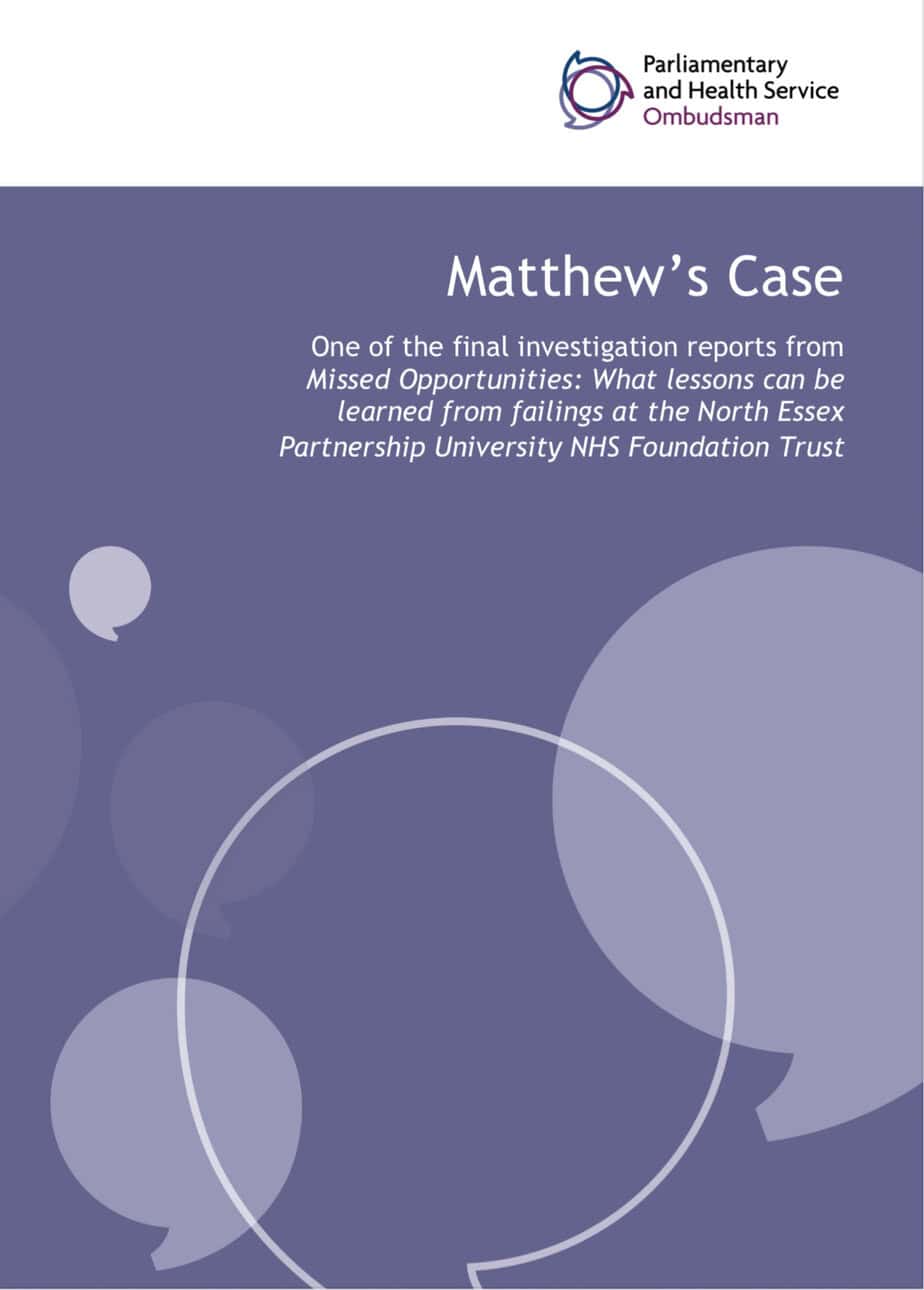
The Ombudsman upheld Melanie Leahy’s complaint about her son Matthew’s care at the Linden Centre, finding significant failures in key areas: no properly allocated key worker, inadequate care planning, poor risk assessment and observation/engagement, and failure to use de-escalation before rapid tranquilisation. NEP’s investigation and openness were also found lacking, causing further distress. [oai_citation:0‡Matthews_Case_PHSO.pdf](file-service://file-N51bfFpmXhsVrwPGcyMqxS)
Download PDF
The Parliamentary and Health Service Ombudsman’s investigation identified serious and repeated failings in mental health care and risk management at Essex services, with families’ concerns ignored and safety guidance not implemented. The report calls for systemic change, transparency, and accountability to prevent further harm.
Download PDF
Following the Ombudsman’s findings, the Public Administration and Constitutional Affairs Committee pressed for action on patient safety and accountability. The Government’s response outlines commitments to improve oversight, learning, and family involvement — setting expectations for culture change across services.
Download PDF
Written evidence submitted to the Public Administration and Constitutional Affairs Committee (PACAC) in response to the PHSO’s Missed Opportunities report. Melanie Leahy’s evidence highlights systemic failings in investigation, a lack of family involvement, ongoing ligature risks, and the absence of meaningful learning. It calls for statutory powers, independent oversight, and a public inquiry to ensure transparency and real reform.
Download PDF
In June 2021, Essex Partnership University NHS Foundation Trust was fined £1.5 million following a prosecution by the Health and Safety Executive (HSE). The case exposed systemic failings over more than a decade, where repeated warnings about ligature risks in mental health wards were ignored. At least 11 patients died by hanging, including Matthew Leahy (2012). The sentencing judge described the Trust’s culpability as “high”, with a “likelihood of harm inevitable.”
Download PDF